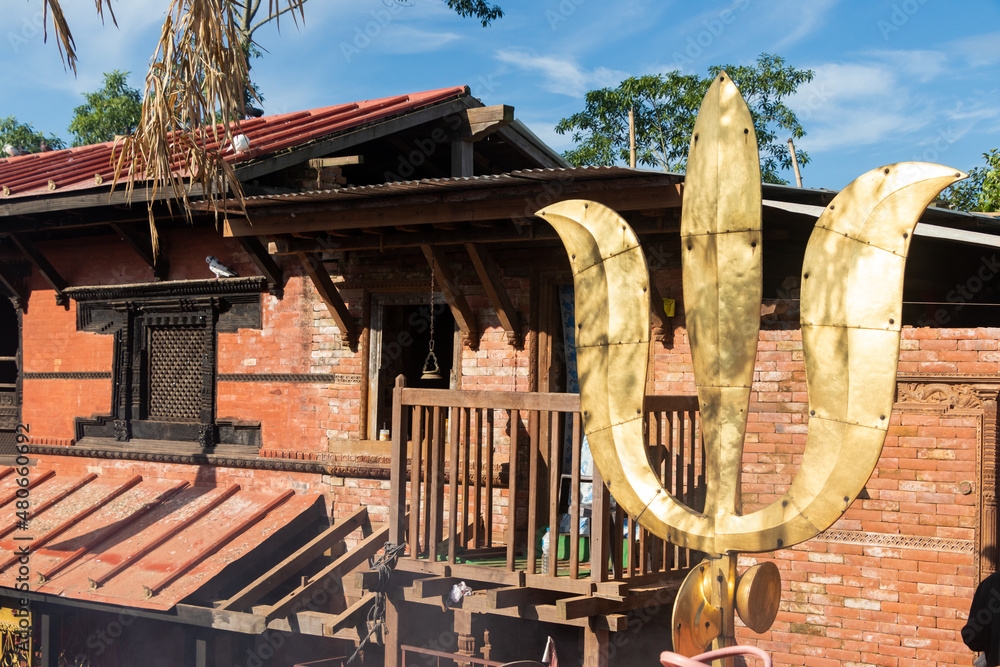
The Deity
Bhairab — The Fierce Protector

The temple is architecturally modest yet spiritually immense. Its small forecourt fills with devotees each morning and evening as incense smoke and the sound of bells drift through the old bazaar lanes. The prasad (sacred food offering) distributed here is especially sought by locals undertaking long journeys or new business ventures — a tradition maintained unbroken for generations.
Bhairab is one of the Ashta Bhairavas — eight forms of Shiva representing the eight directions of the universe. The Tansen Bhairab is particularly associated with protection of the town's lifeblood: its trade routes and hilltop position. Historically, merchants would offer prayers here before descending to the valleys and river crossings below.
Estimated to be over 300 years old, with origins attributed to the Sen dynasty rulers of Palpa.
Sacred Practices
Temple Rituals & Festivals
Daily Puja
Morning and evening aarti (lamp ceremony) are performed by the temple priests, accompanied by the ringing of large brass bells and conch-shell horns. Visitors are welcome to observe respectfully.
Bhairab Ashtami
The festival of Bhairab Ashtami draws thousands of pilgrims to Tansen for processions, night-long prayers, and elaborate offerings. It typically falls in October–November as per the Nepali lunar calendar.
Animal Sacrifice
On certain festival occasions, ritual animal sacrifice (bali) is performed as an ancient form of offering to the fierce deity. These ceremonies are deeply rooted in Tantric tradition and conducted by trained priests.
Taleju Nawami
Linked to the broader Dashain festival, the temple sees heightened worship during Nawami as Bhairab is venerated alongside the goddess Durga in her victory over evil.
Tuesday Offerings
Tuesdays are considered especially auspicious for Bhairab worship. The temple fills with devotees offering red flowers, coconuts, and mustard oil lamps on this day of the week throughout the year.
New Year Prayers
During Navabarsha (Nepali New Year in mid-April), families visit the temple to seek blessings for prosperity, health, and protection in the coming year — a city-wide tradition in Tansen.
Before You Go
Visitor Information
| Hours | 6:00 AM – 7:00 PM daily Inner sanctum opens earlier for priests |
| Entry | Free for all visitors |
| Location | Tansen Old Bazaar, adjacent to Tansen Durbar, Palpa |
| Getting There | 3-minute walk from Tansen Durbar · Follow the bazaar lane north |
| Best Time | Early morning (6–8 AM) for aarti ceremony Festive seasons for processions |
| Photography | Permitted in outer courtyard No photography inside inner sanctum |
| Duration | 30 min – 1.5 hours |
Etiquette & Guidance
Important Notes
Remove Footwear: Shoes must be removed before entering the temple premises. A small rack is available at the entrance for visitors to leave footwear safely.
Modest Dress Required: Shoulders and legs should be covered. Shorts and sleeveless tops are not appropriate inside the temple. Sarongs are sometimes available to borrow at the entrance.
Leather Goods: Out of respect for the sacred space, leather items including belts, bags, and wallets should ideally be left outside or covered when entering the inner areas.
Maintain Silence: Speak softly and refrain from loud conversation or phone calls within the temple compound. The sacred atmosphere is an integral part of the experience.
Menstruation Restrictions: As per traditional practice, menstruating women are requested not to enter the inner sanctum during their period — a custom observed at most Shaiva temples in Nepal.
Seek Blessings at Tansen's Heart
Experience the living faith that has protected this hilltop city for centuries.
View on Map