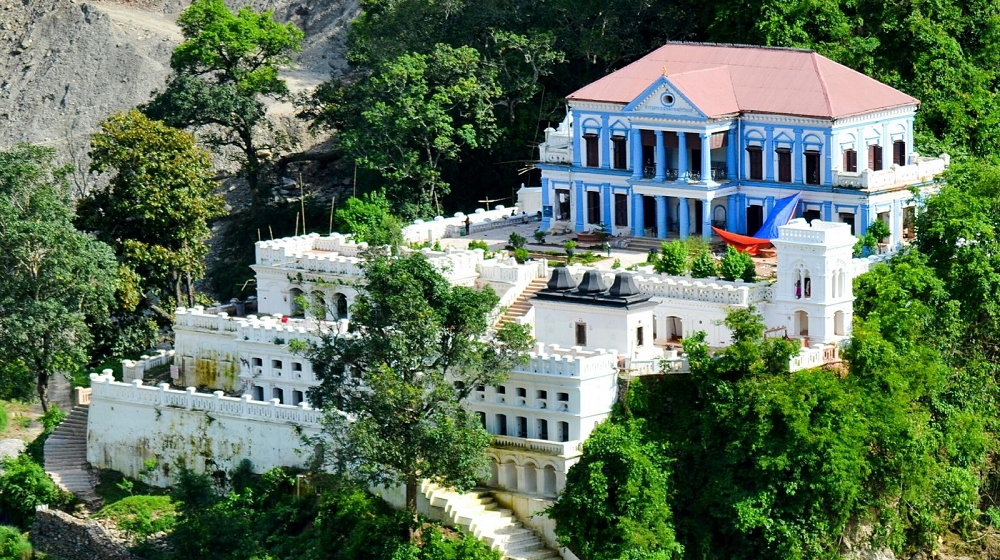
A Love Story in Stone
The Palace Built for a Queen
The Queen Who Changed Everything
Rani Mahal (Queen's Palace) was built by Palpa's Governor, Khadga Shumsher Rana, in memory of his beloved first wife, Tej Kumari Devi, who died at a young age in 1893. Devastated by grief, Khadga Shumsher constructed this magnificent riverside palace at the site he felt closest to her spirit — on the banks of the sacred Kali Gandaki, where the river exits its canyon and enters the plains.
Nepal's "Taj Mahal"
Often called the Taj Mahal of Nepal, the comparison is not merely hyperbolic — like its Mughal counterpart, Rani Mahal is a monument to grief made beautiful, a palace that speaks of love more than power. Its four-storeyed whitewashed facade, Mughal-Newar hybrid arches, and riverside reflection have made it one of the most romantically compelling historical sites in Nepal.
Centuries of Silence
After Khadga Shumsher's exile by the Rana prime minister, the palace fell vacant and began to decay. For generations it stood forgotten beside the river, half-consumed by creeping vegetation — which paradoxically added to its haunted, romantic mystique. Restoration work in recent decades has stabilised the structure while preserving its evocative atmosphere.
"He built her a palace, not to live in — but so she would never be forgotten."
The Structure
Architecture & Design
Mughal–Newar Fusion
The palace blends Mughal pointed arches and symmetrical courtyard planning with the ornate wooden detailing and terracotta brickwork characteristic of Newar palace architecture found in the Kathmandu Valley.
Four-Storey Facade
The whitewashed four-storeyed main block rises from the riverbank with a row of arched windows on each level, creating a mirror image in the waters of the Kali Gandaki on calm mornings.
Riverside Terraces
Stone terraces descend from the palace to the river's edge — originally used for bathing, ritual, and contemplation — and remain accessible to visitors who wish to sit by the sacred water.
Interior Chambers
The internal rooms, though largely stripped bare, retain their proportions and decorative plasterwork, giving a sense of the grandeur that the palace once possessed when furnished as a royal residence.
Ruins & Restoration
Sections of the complex remain in romantic ruin — walls overtaken by fig trees and vines. Archaeological restoration has stabilised the main structure while conserving the site's powerful atmosphere of time-worn beauty.
Temple Annexe
A small temple within the palace grounds remains active, with local residents making offerings — a testament to the site's continued spiritual importance beyond its historical and aesthetic significance.
Practical Details
Visitor Information
| Hours | Sunrise to sunset daily (no fixed closing time) |
| Entry Fee | Free for all visitors Donations welcome for site maintenance |
| Distance | 7 km south of Tansen town Approachable from Bartung village |
| Getting There | Local jeep or motorcycle taxi from Tansen (~30 min) Bike rental available in Tansen Bazaar |
| Best Time | October–March for dry conditions Early morning for river mist photography |
| Photography | Freely permitted throughout the site |
| Duration | 1.5 – 3 hours (plus travel time) |
| Facilities | Basic tea shops near the site entrance No toilet facilities — prepare accordingly |
The Sacred Kali Gandaki
The Kali Gandaki River — one of Nepal's most sacred waterways — flows past Rani Mahal after emerging from the deepest river gorge on earth between Dhaulagiri and Annapurna. Shaligram fossils (ammonites considered manifestations of Vishnu) are found in its riverbeds. Swimming in the river near the palace is popular with locals, though the current can be deceptively strong.
Sacred Water Shaligram Fossils Swim with CautionTips for Your Visit
The best photographic angle of the palace facade is from the stone steps at the river's edge — especially at sunrise when mist rises from the water and the whitewashed walls glow orange-gold.
Negotiate a round-trip jeep from Tansen Bazaar — ask drivers to wait while you explore, as onward transport from the site itself is unreliable, especially late afternoon.
Wear sturdy footwear — the paths around the palace are uneven stone and can be slippery near the river, especially in the morning dew or after rain.
Carry water and snacks. While tea stalls operate near the entrance, there are no restaurants at the site itself. The nearest proper food stops are back in Tansen.
Avoid midday visits in summer — the site has little shade and the heat reflected from the white palace walls can be intense. Early morning and late afternoon are far more pleasant.
Visit Nepal's Palace of Love
A site where history, romance, and the sacred river converge into something unforgettable.
Get Directions View Gallery